We've been making cords in Jaipur for over 20 years, and t-shirt yarn is the one product we don't actually spin. We recover it. It comes off knit fabric as selvedge — the edge strip mills would otherwise throw away — and we cut, sort, and wind it onto cones ready for the hook.
The demand isn't small. Google search data (July 2026) shows 8,100 monthly searches for t shirt yarn in the USA alone, and India adds another 3,600. Crocheters buy it for baskets, rugs, and bags because it's thick, stretchy, and works up fast.
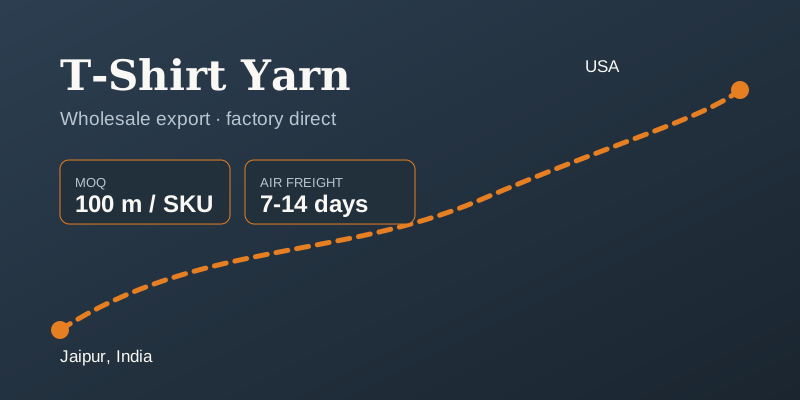
If you're a wholesale buyer, here's what matters: 7-9mm stretch width, cones of 0.5-1kg, mixed or sorted colour lots, and an MOQ of just 100 meters per SKU. We answer every quote within one working day.
What is t-shirt yarn, exactly?
T-shirt yarn is a continuous strip of recycled knit selvedge — the trimmed edge from t-shirt fabric production — that curls into a soft, stretchy cord when you pull it. Nobody spins it. It's recovered, and that's the whole point.
Ours runs 7-9mm in stretch width. The range exists because this is a by-product, not an extruded cord: every fabric lot carries its own weight and knit tension, so the strip behaves a little differently lot to lot. We sort for consistency within each cone, wind 0.5-1kg per cone, and ship it ready to use.
The market for it is real and measurable. Google search data (July 2026) shows 8,100 monthly searches for t shirt yarn in the USA, and India contributes another 3,600 searches a month for the same term. Most of that traffic is crafters and small brands hunting for steady bulk supply.
Why does the price move every quarter?
Because we don't control the raw material. T-shirt yarn is a recycling by-product — when knit mills run heavy production, selvedge floods in and prices soften. When the mills slow down, supply tightens fast. Price moves. That's the trade.
Honestly, I think this volatility scares off buyers who'd otherwise love the product, and it shouldn't. Our contract buyers handle it the simple way: they lock rates quarterly. We agree a price against projected fabric-lot availability, they get budget certainty, and we get planned volume. Everyone sleeps better.
How do mixed and sorted colour lots work?
Two ways to buy. Mixed lots are exactly what they sound like — whatever colours the fabric lots produced that cycle, wound cone by cone. They're cheaper and genuinely random (this surprises most buyers, who assume we secretly curate them). Sorted lots are graded by shade family at our factory: you order blues, you get blues.
Practical advice from 20+ years in cordage: mixed lots suit rug and basket makers selling one-off pieces. Sorted lots suit anyone building a repeatable product line, where a customer reorders that grey bag and expects the same grey.
What do buyers make with it?
Crochet baskets first, rugs second, bags third — that's the order we see across the 50+ countries we export to. The 7-9mm width works up fast and holds its shape without stiffening agents.
- Baskets: the natural stretch lets tight stitches lock into firm walls.
- Rugs: mixed colour lots keep material costs down on big floor pieces.
- Bags: sorted lots give repeatable colourways; pair the handles with our macrame cord.
MOQ is 100 meters per SKU, so you can trial several colour lots in one order without committing to a container. Small start. Real test.